
Titanium dioxide in road paving: How titanium dioxide helps cool city streets
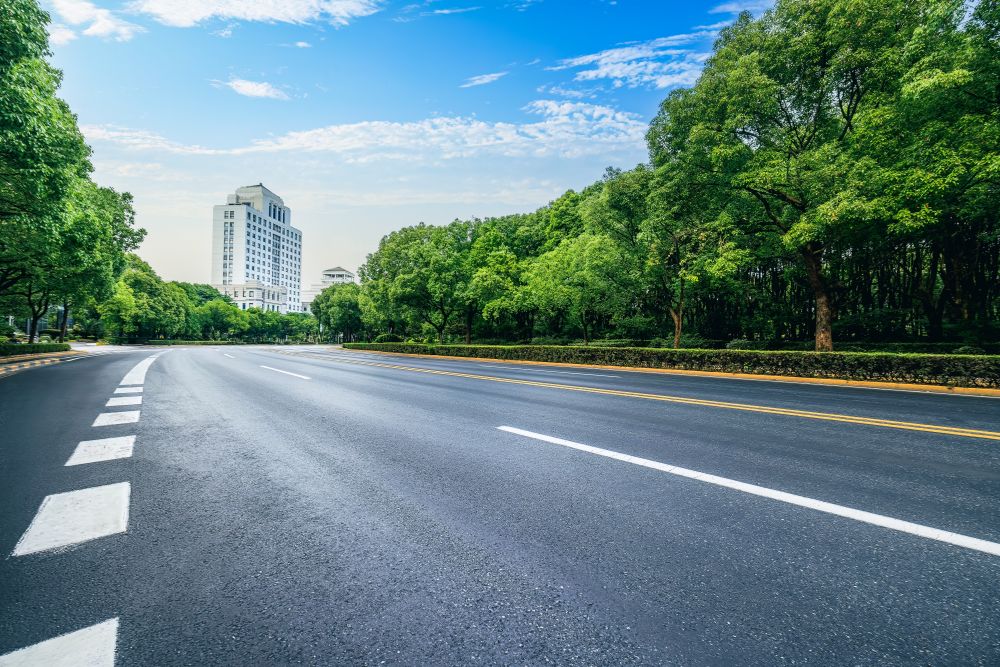
Urban heat islands raise ambient temperatures, increase cooling energy demand, and disproportionately affect residents with limited access to air conditioning. Reflective pavement is one of several tools, alongside tree canopy and cool roofing, that city planners are testing to address this. Titanium dioxide is emerging as a reflective coating additive that helps asphalt reflect more sunlight and absorb less heat, helping cities manage the urban heat island effect.
What is TiO2-modified reflective pavement?
Conventional dark asphalt absorbs most of the sunlight that hits it and re-releases that energy as heat, making paved areas significantly hotter than surrounding green space. Reflective, or “cool,” pavement technologies address this by changing how much solar energy a road surface absorbs in the first place.
Titanium dioxide is one of the most widely used materials in these coatings. Because of its high refractive index, TiO2 scatters and reflects visible and near-infrared light very effectively. When applied as a surface coating or mixed into a pavement rejuvenator, it lightens the road surface and reflects a much larger share of incoming solar radiation than untreated asphalt.
How much does it actually cool the road?
Peer-reviewed field testing has measured meaningful temperature reductions. Reflective coatings formulated with titanium dioxide have been shown to reflect 60–80% of solar radiation, with field tests reporting surface temperature reductions of 8–10°C.*
Does it do anything besides reflect heat?
Titanium dioxide is also a photocatalyst: when exposed to sunlight, it can help break down some airborne pollutants that settle on the road surface, including compounds released by vehicle exhaust.
Why does this matter for cities?
Because roads make up a large share of urban surface area, even modest reductions in pavement temperature can measurably affect a neighbourhood’s overall heat profile.
Sources:
* https://www.sciencedirect.com/science/article/abs/pii/S2210670722002712

